Some roads are built to move you quickly. The Blue Ridge Parkway asks something different.
It asks you to slow down.
To leave room between the destination and the departure, stop when the mountains suddenly open beyond the windshield. Follow a trail simply because it disappears into the trees, or to pull over for one more photograph, even when the camera has already failed to capture what the eye can see.
In its recent guide to the most scenic road trips in the United States, Condé Nast Traveler celebrates the enduring ritual of discovering America from behind the wheel. Among the routes winding along coastlines, through deserts and across mountain passes, the Blue Ridge Parkway remains one of the country’s most evocative drives.
Stretching 469 miles through Virginia and North Carolina, the Parkway connects Shenandoah National Park with Great Smoky Mountains National Park. Yet its appeal cannot be measured in miles alone. This is a road best understood in layers: ridgelines fading into blue, tunnels carved through mountains, forests changing with the elevation and small towns that encourage travelers to stay longer than planned.
Near the southern half of the route, Asheville becomes something more than another stop on the map. It is where the quiet of the mountains meets the creative current of the city, making it an ideal beginning, ending or beautifully unhurried intermission during a Blue Ridge Parkway road trip.
The Road Is the Destination
The Blue Ridge Parkway has long been known as “America’s Favorite Drive,” although driving is only part of the experience.
There are no billboards competing for attention and few commercial distractions along the route. Instead, the landscape sets the pace. Forests gather close to the roadside before giving way to long-range overlooks. Morning mist settles into the valleys. Weather changes quickly at higher elevations, occasionally placing travelers inside the very clouds they had been admiring from below.
The Parkway’s generally relaxed speed limits are part of its design. This is not a road to conquer. It is a road to notice.
Pack a picnic. Download a playlist before leaving the city. Keep an extra layer within reach, even during warmer months. Most importantly, resist the urge to schedule every mile. Some of the journey’s finest moments appear without an itinerary: a roadside trail, an unexpected patch of wildflowers or a quiet overlook momentarily emptied of everyone else.
Begin with Appalachian Craft
For travelers leaving from downtown Asheville, the Folk Art Center at Milepost 382 makes a thoughtful first stop.
Home to the Southern Highland Craft Guild, the center introduces visitors to the living craft traditions of the Southern Appalachian region. Inside, galleries and demonstrations reveal the hands behind the landscape: potters, woodworkers, basket makers, textile artists and craftspeople carrying regional techniques into the present.
It is an important reminder that the Blue Ridge Mountains are not merely scenery. They are part of a cultural landscape shaped by generations of makers, musicians, farmers and storytellers.
Nearby, the Blue Ridge Parkway Visitor Center provides maps, exhibits and practical guidance for the day’s drive. Even spontaneous road trips benefit from a conversation with someone who knows the mountains, particularly when weather, maintenance or seasonal conditions may affect the route.
Follow the Mountains North
From Asheville, driving north brings the road toward higher elevations and increasingly dramatic views.
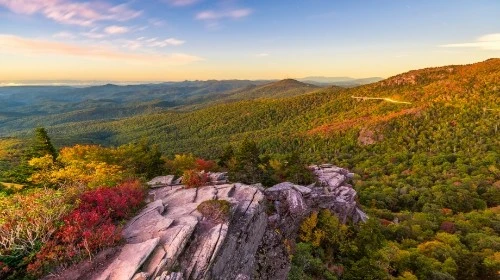
Craggy Gardens is one of the most memorable destinations along this stretch. Known for its exposed ridgelines, wind-shaped vegetation and far-reaching mountain vistas, the area feels distinctly different from the forested elevations below. During rhododendron season, the landscape briefly erupts with color. At other times, the shifting fog and sculptural trees create a quieter kind of theater.
The Craggy Pinnacle Trail is relatively short, but the reward feels expansive. From the summit, overlapping mountain ranges recede toward the horizon in softening shades of blue. Arrive early or linger toward evening, when the light becomes gentler and the landscape begins to resemble a watercolor still in progress.
Farther north, Mount Mitchell rises to the highest elevation east of the Mississippi River. Access and road conditions can change, but when the route is open, the journey toward the summit offers one of the most compelling high-elevation experiences in the region.
The distance on a map may appear manageable. The mountain road will make it feel longer, in the best possible way.
Or Wander South Toward Waterfalls
The southern route from Asheville leads toward forests, high-country meadows and some of Western North Carolina’s most beloved waterfall country.
The North Carolina Arboretum, reached near the Parkway and Pisgah National Forest, offers cultivated gardens, wooded trails and an elegant transition between the city and the wilderness. It is particularly appealing for travelers who want an outdoor experience without committing to a strenuous hike.
Continue farther and the landscape begins to open around high-elevation destinations such as Graveyard Fields and the Black Balsam area. Depending on current access conditions, these stretches can offer waterfall trails, broad mountain balds and views that feel almost alpine.
Beyond the Parkway, Pisgah National Forest holds its own collection of natural landmarks, including Looking Glass Falls and Sliding Rock. These popular sites are best approached early in the day, before parking areas fill and the forest becomes busy with afternoon visitors.
Travelers continuing toward Cherokee can eventually reach the southern terminus of the Parkway and the gateway to Great Smoky Mountains National Park. Those returning to Asheville can turn the journey into a leisurely loop, arriving downtown in time for a late dinner and a very different kind of mountain view.
Asheville After the Overlooks
After hours spent looking outward, Asheville invites travelers to look closer.
Downtown’s historic architecture holds an independent collection of galleries, restaurants, bookstores, music venues and locally owned shops within a compact, walkable center. The city feels connected to the mountains without being defined solely by them. Its creative identity is distinctly urban, yet softened by the landscape that surrounds it.
Spend an afternoon browsing studios and galleries. Follow the aroma of freshly roasted coffee into a neighborhood café. Make an early dinner reservation, then abandon it for a restaurant discovered along the way. Asheville rewards curiosity with the same generosity as the Parkway.
The city’s culinary culture is inseparable from the farms, forests and communities around it. Appalachian ingredients appear in both traditional and unexpected forms. Local breweries share blocks with cocktail bars, bakeries and chef-driven dining rooms. Even a casual meal can feel rooted in place.
This is the pleasure of ending a road trip in Asheville: the sense of discovery does not disappear when the car is parked. It simply changes shape.
A Curated 48 Hours in Asheville
Day One: From the Parkway to Downtown
Begin with a morning drive along an open section of the Blue Ridge Parkway, choosing either a northern route toward Craggy Gardens or a southern route toward the Folk Art Center and North Carolina Arboretum.
Return to Asheville in the afternoon and leave the car behind. Explore downtown on foot, stopping into independent shops, galleries and cafés as they catch your attention.
As evening arrives, head to The Observatory at The Restoration Asheville for a botanical cocktail overlooking downtown and the surrounding Blue Ridge Mountains. Watching the light move across the ridgelines offers a fitting epilogue to the day’s drive.
After dinner, descend to The Draftsman, the hotel’s relaxed underground bar and lounge, where local beer, games and live entertainment trade mountain stillness for a little after-dark energy.
Then Day Two: Art, Flavor and an Unhurried Morning
Begin with coffee and a slow breakfast before exploring Asheville’s creative side. Visit local galleries, browse the city’s boutiques or spend time in the River Arts District, where working studios offer a closer look at the artists shaping Asheville today.
Reserve the afternoon for a second mountain excursion, a visit to the Biltmore Estate or simply more time downtown. Not every getaway needs to be filled edge to edge. Asheville is particularly good at making an open afternoon feel intentional.
Return for sunset drinks, dinner and the rare luxury of not needing to drive anywhere else.
Where to Stay After a Blue Ridge Parkway Drive
The best road trips balance movement with stillness.
After a day of winding roads, trailheads and overlooks, The Restoration Asheville offers space to settle into the city rather than simply pass through it. The all-suite hotel sits in the heart of downtown, placing restaurants, galleries, shops and live music within easy reach.
Inside, spacious accommodations create a residential sense of ease. Guests can begin the morning with a breakfast basket, consult the Guest Curator for local recommendations and return from the mountains without needing to plan another outing immediately.
Dining, cocktails and entertainment are all available beneath one roof. The Watch brings guests together over dinner, The Observatory frames the mountains from above and The Draftsman keeps the evening going below street level.
It is a hotel designed for travelers who want to experience Asheville, not merely sleep beside it.
And for those extending the road trip over several days, The Restoration’s Stay More, Save More offer provides an excellent reason to leave a little more white space in the itinerary.
Before You Drive
Conditions along the Blue Ridge Parkway can change because of weather, maintenance, construction and ongoing recovery work. Cell service may also be limited in mountain areas.
Before leaving Asheville:
- Review the National Park Service’s current Blue Ridge Parkway road status and closures.
- Download maps and directions before entering areas with limited reception.
- Fill the gas tank, as fuel is not available directly along the Parkway.
- Bring water, snacks and an extra layer.
- Allow significantly more time than the mileage suggests.
- Stay on designated trails and leave overlooks, forests and picnic areas as you found them.
The most successful Blue Ridge Parkway itinerary is not the one that checks the most places off a list. It is the one that leaves enough time to notice where you are.
The Long Way Home
Eventually, every road trip reaches the point when the suitcases must be repacked and the route begins turning homeward.
Yet the Blue Ridge Parkway has a way of lingering.
Perhaps it is the slowness of the road, the mountains repeating into the distance or the sensation of watching the landscape change one curve at a time. Perhaps it is Asheville itself, with its rooftop evenings, handmade objects and creative momentum gathered beneath the ridgelines.
Whatever the reason, the journey makes a persuasive case for choosing the scenic route more often.
After all, the shortest distance between two points may be efficient.
But it rarely becomes a story.
Frequently Asked Questions About a Blue Ridge Parkway Road Trip
How long is the Blue Ridge Parkway?
The Blue Ridge Parkway extends 469 miles through Virginia and North Carolina, connecting Shenandoah National Park near its northern end with Great Smoky Mountains National Park near its southern end.
Does the Blue Ridge Parkway pass through Asheville?
The Parkway runs along the eastern and southern edges of Asheville, with several convenient access points near the city. The Folk Art Center and Blue Ridge Parkway Visitor Center are both approximately six miles from downtown.
How many days do you need for a Blue Ridge Parkway road trip?
Driving the full Parkway is best experienced over at least five to seven days. Travelers using Asheville as a base can enjoy shorter scenic sections during a two- or three-night getaway without attempting the entire route.
What is the best time to drive the Blue Ridge Parkway near Asheville?
Spring brings wildflowers and rhododendrons, summer offers lush mountain scenery, and fall is celebrated for its changing foliage. Conditions vary considerably by elevation, and winter weather can produce temporary closures.
Where should you stay when driving the Blue Ridge Parkway?
Asheville makes an excellent base because it combines convenient Parkway access with restaurants, galleries, shops and cultural experiences. The Restoration Asheville offers all-suite accommodations in the heart of downtown, along with on-site dining, a rooftop bar and a Guest Curator team.
Are there restaurants and gas stations on the Blue Ridge Parkway?
Services are limited along the Parkway, and gas is not available directly on the route. Travelers should refuel before leaving Asheville and carry water and snacks. Restaurants and services can be found in nearby gateway communities.
Is the entire Blue Ridge Parkway currently open?
Not always. Weather, construction, maintenance and recovery projects can result in temporary or longer-term closures. Travelers should check the National Park Service road-status page immediately before departing.
Can you visit the Blue Ridge Parkway without hiking?
Yes. Many overlooks, visitor centers and scenic destinations can be enjoyed with little or no hiking. The drive itself provides extensive mountain views, while stops such as the Folk Art Center add cultural experiences to the itinerary.
Plan Your Asheville Road Trip
Take the long way through the Blue Ridge Mountains, then settle into an all-suite stay in the heart of downtown.