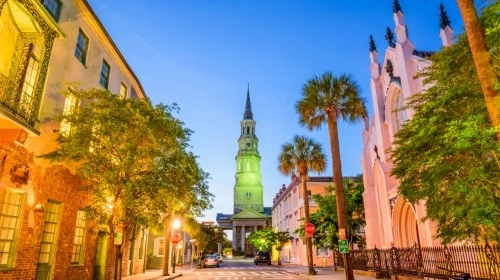

Calling All History Buffs: Explore Charleston’s Timeless Past
Charleston is a living museum. With cobblestone streets, antebellum homes, historic churches, and waterfront forts, the city offers one of the richest historical landscapes in the South. For travelers fascinated by America’s past, these Charleston history attractions deliver immersive stories at every turn.
Even better, staying at The Restoration Hotel Charleston places you within walking distance of many of these sites. As a result, you can explore at your own pace—without the hassle of transportation or parking.
1. Walk Through the Historic District
First and foremost, Charleston’s downtown historic district provides an immediate step back in time. Pastel homes line narrow streets. Wrought-iron gates frame vine-covered courtyards. Gas lanterns glow along centuries-old cobblestone alleys.
As you wander, plaques reveal stories of merchants, enslaved artisans, early settlers, and wartime defenders. In addition, guided walking tours operate daily and enrich the experience with layered personal accounts.
Therefore, whether exploring independently or with a guide, this district remains the foundation of any history-focused visit.
2. Tour Charleston’s Historic Churches
Next, explore the iconic churches shaping Charleston’s skyline. St. Michael’s Church, the city’s oldest surviving religious structure, rises high above Broad Street. Meanwhile, Circular Congregational Church reflects Charleston’s early religious diversity through its unique round design.
Additionally, many churches welcome visitors for quiet touring. Graveyards reveal early settlers, artisans, and community leaders whose names shaped the city.
Because of this, religious landmarks offer both architectural beauty and peaceful reflection alongside historic storytelling.
3. Visit Drayton Hall & Magnolia Plantation
Beyond downtown, two of Charleston’s most significant historic plantation sites preserve vital stories of colonial life and enslaved labor.
-
Drayton Hall stands as the oldest unrestored plantation house open to the public, allowing visitors to view the structure exactly as it survived history.
-
Magnolia Plantation & Gardens combines preserved slave cabins with serene gardens that contrast beauty with difficult historical realities.
Together, these sites present powerful educational experiences. They also ensure visitors understand Charleston’s layered legacy—both its grandeur and its injustice.
4. Step Into the Charleston Museum
Known as America’s first museum, the Charleston Museum offers detailed exhibits on archaeology, natural history, military accounts, maritime trade, and local culture.
Moreover, rotating exhibitions continually refresh storytelling perspectives. Interactive galleries also make the museum accessible to visitors of all ages.
As a result, history lovers seeking depth beyond buildings enjoy a fully contextualized exploration of the region’s past.
5. Explore Waterfront Defense at Fort Sumter
No historical visit feels complete without recognizing Charleston Harbor’s military role. Fort Sumter, the site where the first shots of the Civil War were fired, remains one of the most significant landmarks in American history.
Visitors board boat tours from downtown, gaining harbor views while learning detailed accounts of maritime defense.
Consequently, this site connects Charleston’s peaceful waterfront scenery with its powerful wartime heritage.
6. Wander the Old Exchange & Provost Dungeon
Located along East Bay Street, the Old Exchange & Provost Dungeon stands as one of the city’s oldest public buildings. It served multiple roles—customs house, meeting hall, and military prison.
Inside, exhibits showcase colonial commerce, Revolutionary War history, and stories of prisoners once held below ground.
Therefore, this attraction presents compact yet compelling insight into Charleston’s commercial and colonial foundations.
7. Book a Carriage Ride for Historical Storytelling
Another immersive option involves guided carriage tours through downtown streets. These rides combine comfort with narration, offering efficient storytellers who link landmarks with personal anecdotes.
Moreover, they provide a wonderful overview for first-time visitors. Afterward, guests typically revisit their favorite neighborhoods on foot for closer inspection.
8. Experience living history at local artifacts & markets
Beyond museums, Charleston’s history shines in daily life. Sweetgrass basket artisans preserve craft traditions passed down for centuries. Historic City Market vendors reflect old-world commerce culture.
Meanwhile, preservation districts continue restoring homes using traditional methods—keeping authenticity alive rather than simulated.
Because of this, visitors witness cultural continuity rather than only static exhibits.
9. Stay Where History Meets Comfort
After full days of exploring Charleston’s historic depths, comfort matters.
The Restoration Hotel Charleston provides a home-base that blends heritage surroundings with modern luxury. Apartment-style suites, walkable access to sites, and calm hospitality create recovery space between outings.
Furthermore, guests can curate schedules without transportation delays. Everything rests within an easy stroll from the hotel door.
10. History Comes Alive Here
History in Charleston does not sit behind glass. Instead, it breathes through architecture, waterways, marketplaces, and cultural rituals.
Ultimately, Charleston history attractions invite travelers to walk through layered time—colonial ambitions, African heritage, wartime endurance, preservation movements, and modern cultural revival—all inside one unforgettable destination.
If you’re drawn to stories etched in stone, moss, and memory, Charleston awaits.
Ready to explore America’s most walkable historic city? Book your stay at The Restoration Hotel Charleston today.